Battery range gets most of the attention when someone shops for a used electric car. It’s easy to look at the estimated miles on the screen, compare that number with what the car had when new, and decide whether the EV is healthy.
That number is only part of the story. Range changes with temperature, driving style, tire pressure, cabin heat, recent highway use, and the way the computer calculates its estimate. A proper pre-purchase inspection looks beyond the range display and checks the expensive systems, wear items, and charging equipment that will affect what owning the car is actually like.
1. Check the High-Voltage Battery Condition
The traction battery is the big-ticket component everyone worries about, but you can’t judge battery health from the range display alone. Where supported, we look at battery data, stored faults, charging behavior, and any information the vehicle provides about battery condition or usable capacity.
Temperature management deserves attention too. Most EV batteries depend on a cooling or heating system to keep the cells within a reasonable operating range. Coolant leaks, thermal-management faults, or battery temperature warnings matter even if the car still charges and drives normally today.
2. Inspect the Battery Case and Undercarriage
EV battery packs are commonly mounted underneath the passenger compartment. That location keeps the vehicle’s center of gravity low, but it also means the battery enclosure sits relatively close to curbs, road debris, parking blocks, and objects in the road.
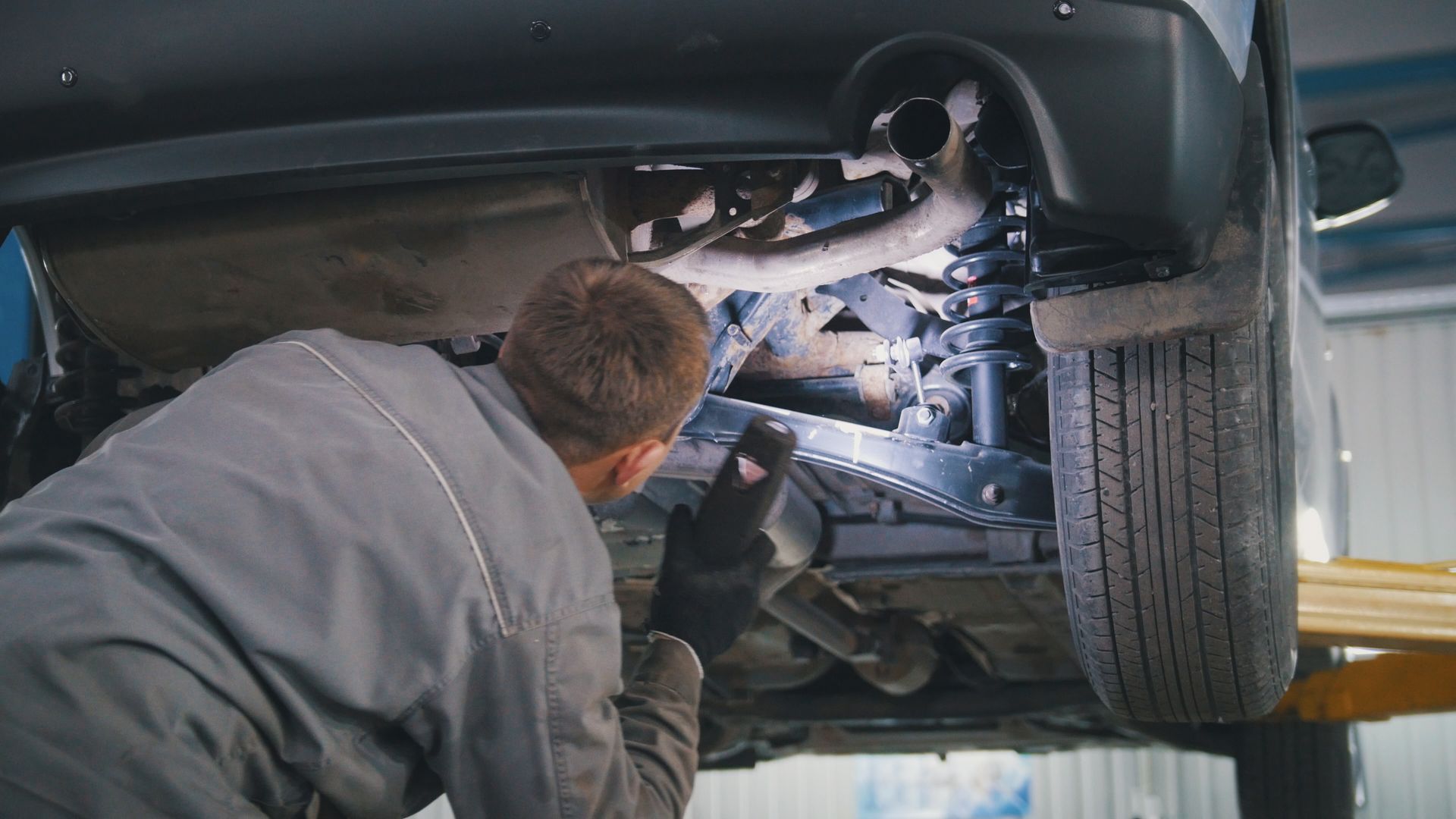
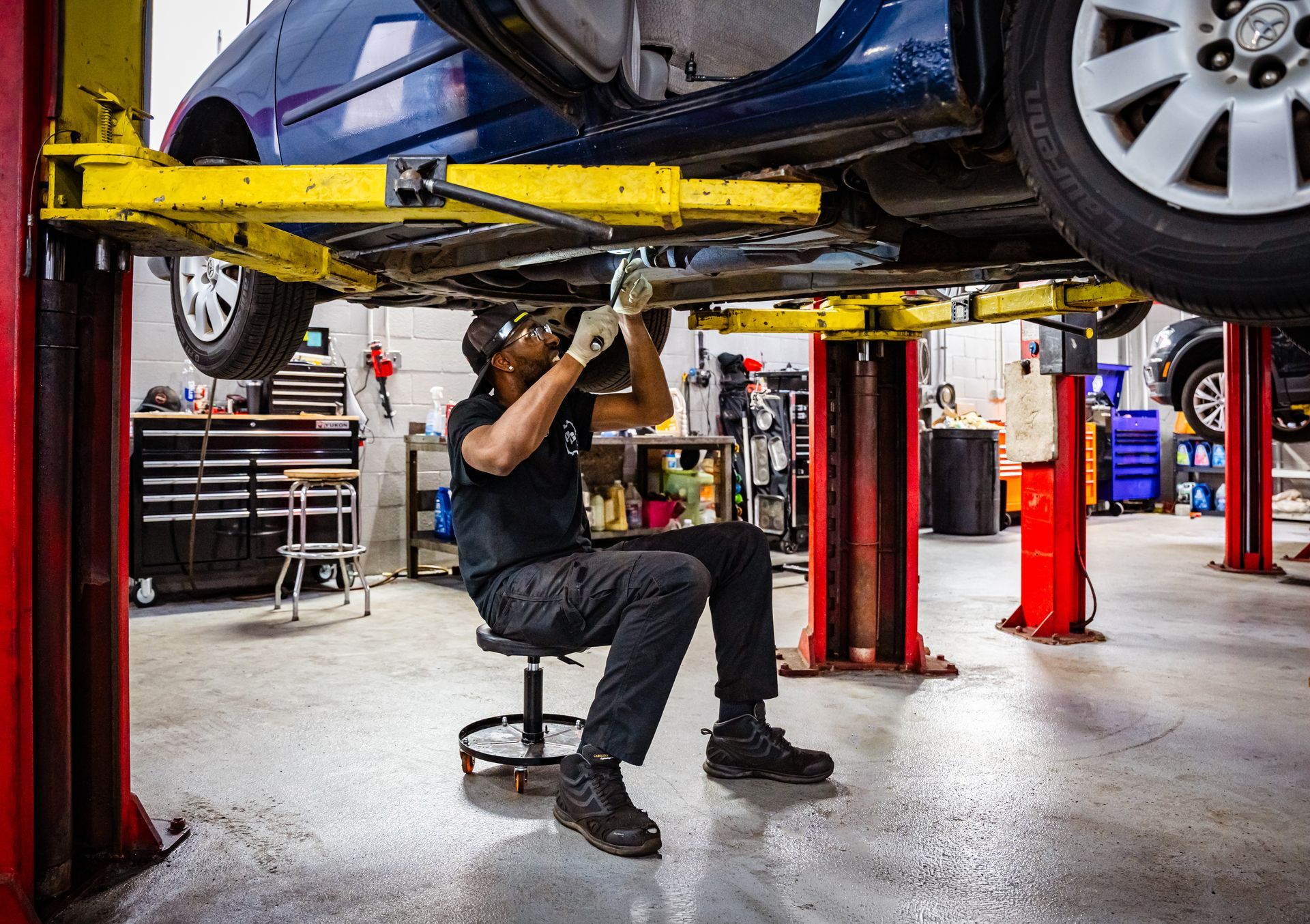
We want to see the underside, not just the bodywork. Scrapes are common and don’t automatically mean the battery is damaged, but deep dents, punctures, distorted protective panels, fresh sealant, or signs of a hard impact deserve a much closer look. Evidence of previous underbody repair should also be compared with the vehicle’s history.
3. Test Both Level 2 and DC Fast Charging When Possible
A used EV can charge successfully from a household or Level 2 charger and still have a problem with DC fast charging. The two charging methods use different parts of the vehicle’s charging system, so checking only one doesn’t tell the whole story.
Look at the charge port for heat damage, corrosion, broken pins, a damaged door, or a connector that doesn’t lock correctly. If practical, confirm that the vehicle accepts a charge without repeatedly stopping or displaying errors. Someone who depends on public fast charging for longer trips will care far more about this than an owner who plugs in at home every night.
4. Look Closely at the Tires and Alignment
Electric vehicles are heavy, and instant motor torque can be hard on tires. A used EV with surprisingly low mileage may already be well into its second set. Inner-edge wear is especially easy to miss when the car is sitting on the ground.
Look across the entire tread and compare all four tires. Uneven shoulder wear, cupping, mismatched tire models, or a steering wheel that sits off-center can point toward alignment or suspension concerns. On vehicles with different front and rear tire sizes, make sure the correct sizes are installed in the correct positions rather than assuming all four should match.
5. Check the Brakes Even If Regenerative Braking Feels Fine
Regenerative braking lets the electric motor slow the car and send some energy back into the battery. Because you use the friction brakes less, the pads can last a long time. That sounds entirely positive until you look at what happens to hardware that spends much of its life barely moving.
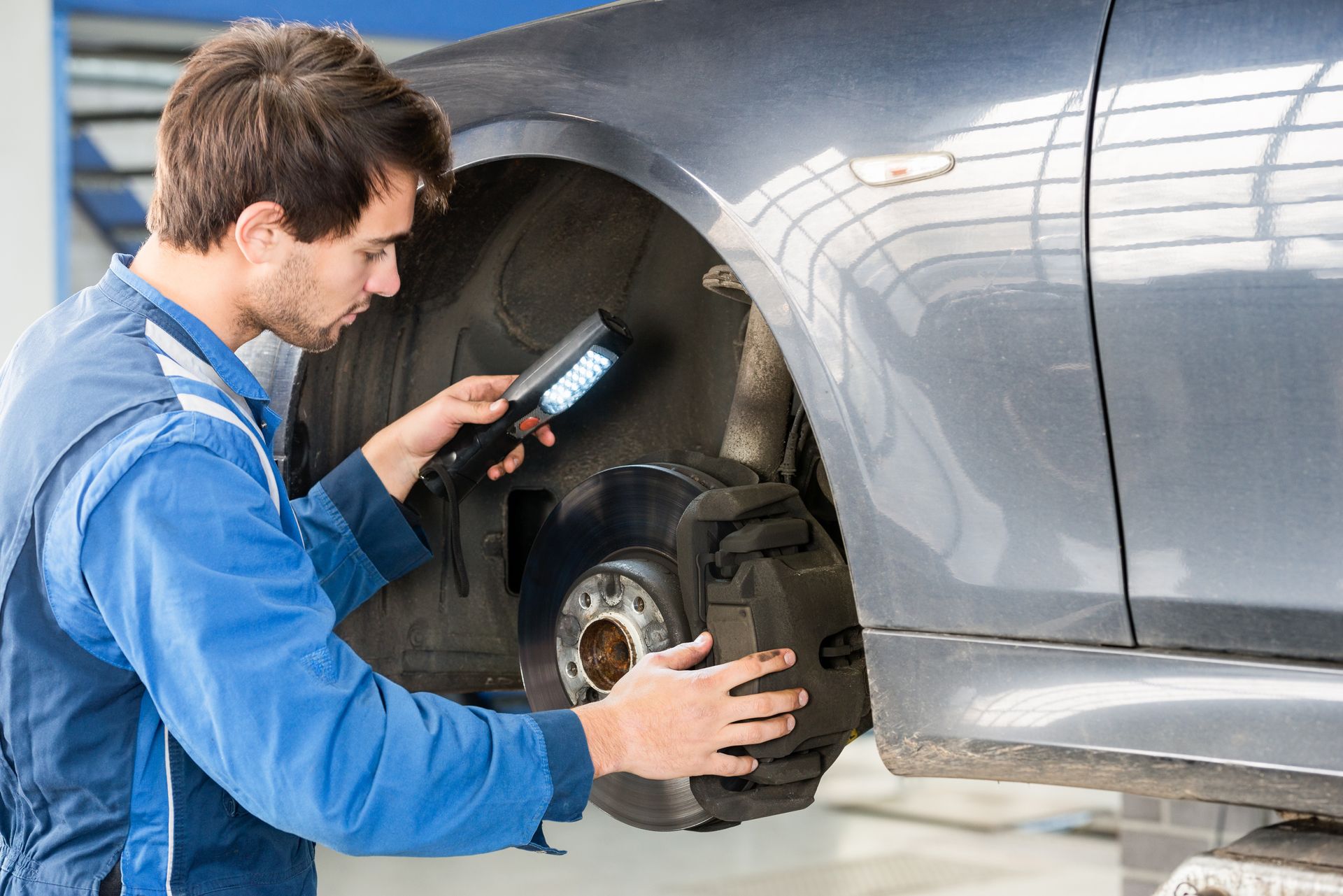
We sometimes find rusted rotors, sticking caliper slides, or uneven pad contact on EVs with plenty of brake pad thickness remaining. During a road test, use the physical brakes enough to feel whether they stop evenly without grinding, vibration, or pulling. A brake inspection should assess condition, not just how much pad material remains.
6. Don’t Forget the 12-Volt Battery and Electronics
The large traction battery powers the drive motors, but most EVs still rely on a conventional low-voltage battery for computers, locks, lights, contactors, and other electronics. A weak 12-volt battery can create strange warnings or even prevent an electric car with a fully charged traction battery from becoming ready to drive.
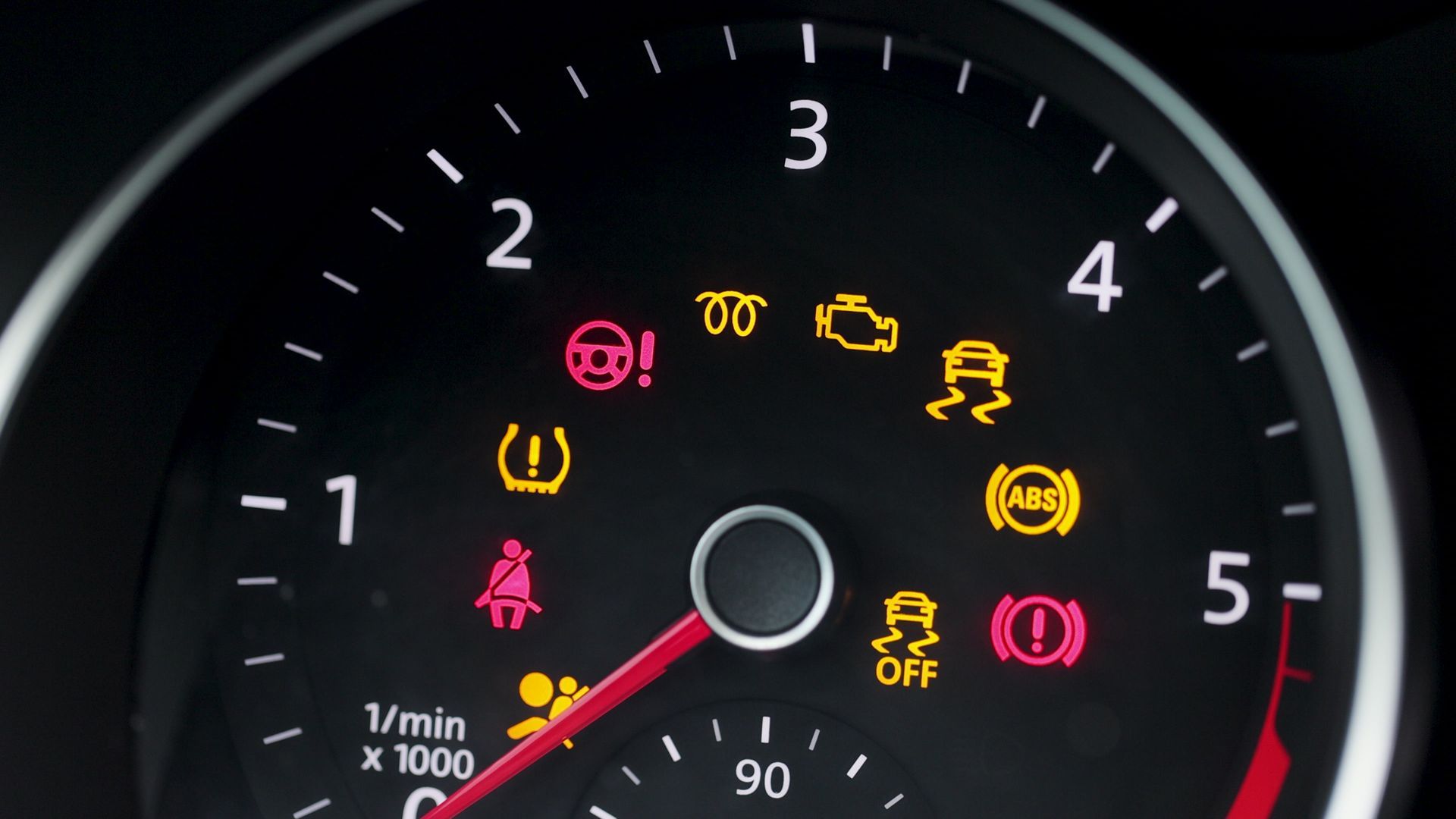
Test the climate control, heated seats, cameras, driver-assistance features, power accessories, and infotainment system. Also watch for warning messages that disappear after startup. Intermittent electronic faults are worth investigating before purchase instead of assuming a software update will solve everything.
7. Road-Test the EV Like a Car, Not Just an Electric Car
Quiet operation can hide noises you would notice immediately in a gasoline vehicle. With no engine covering them up, wheel-bearing hum, suspension clunks, tire noise, and drivetrain vibration deserve attention.
Accelerate firmly enough to feel whether power delivery is clean, then drive at highway speed and over rougher pavement if possible. Listen during tight turns and low-speed parking maneuvers, too. At our shop, we also pay attention to steering feel, suspension noise, charging or propulsion warnings, and whether anything changes once the vehicle has been driven long enough to warm up.
Get Used Electric Car Pre-Purchase Inspection In Delaware And Pennsylvania, With Paul Campanella’s Auto Centers
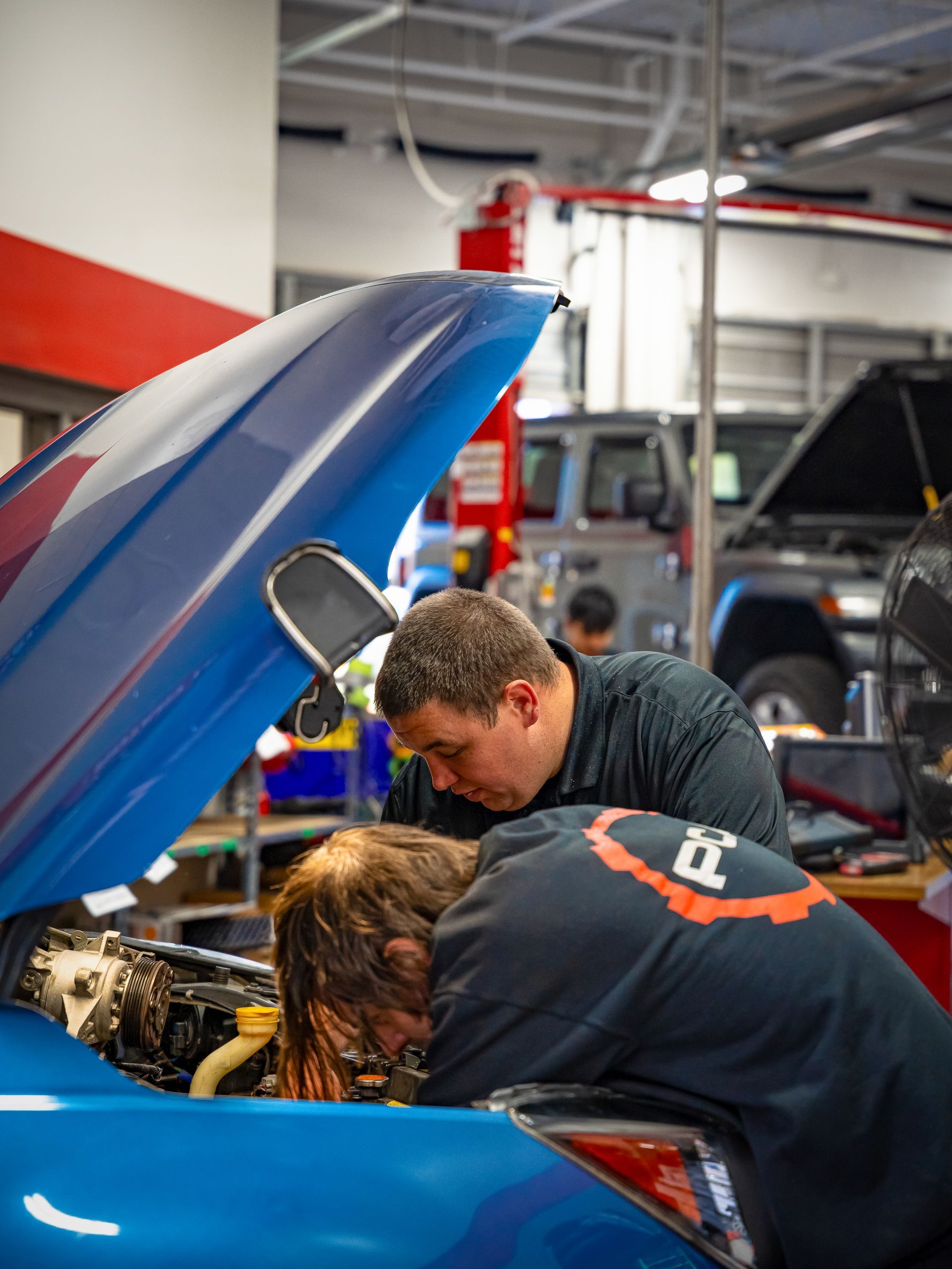
If you’re considering a used EV, Paul Campanella’s Auto Centers can check the battery system, charging equipment, brakes, tires, suspension, electronics, underbody, and other areas a range estimate won’t cover at locations serving Delaware and Pennsylvania.