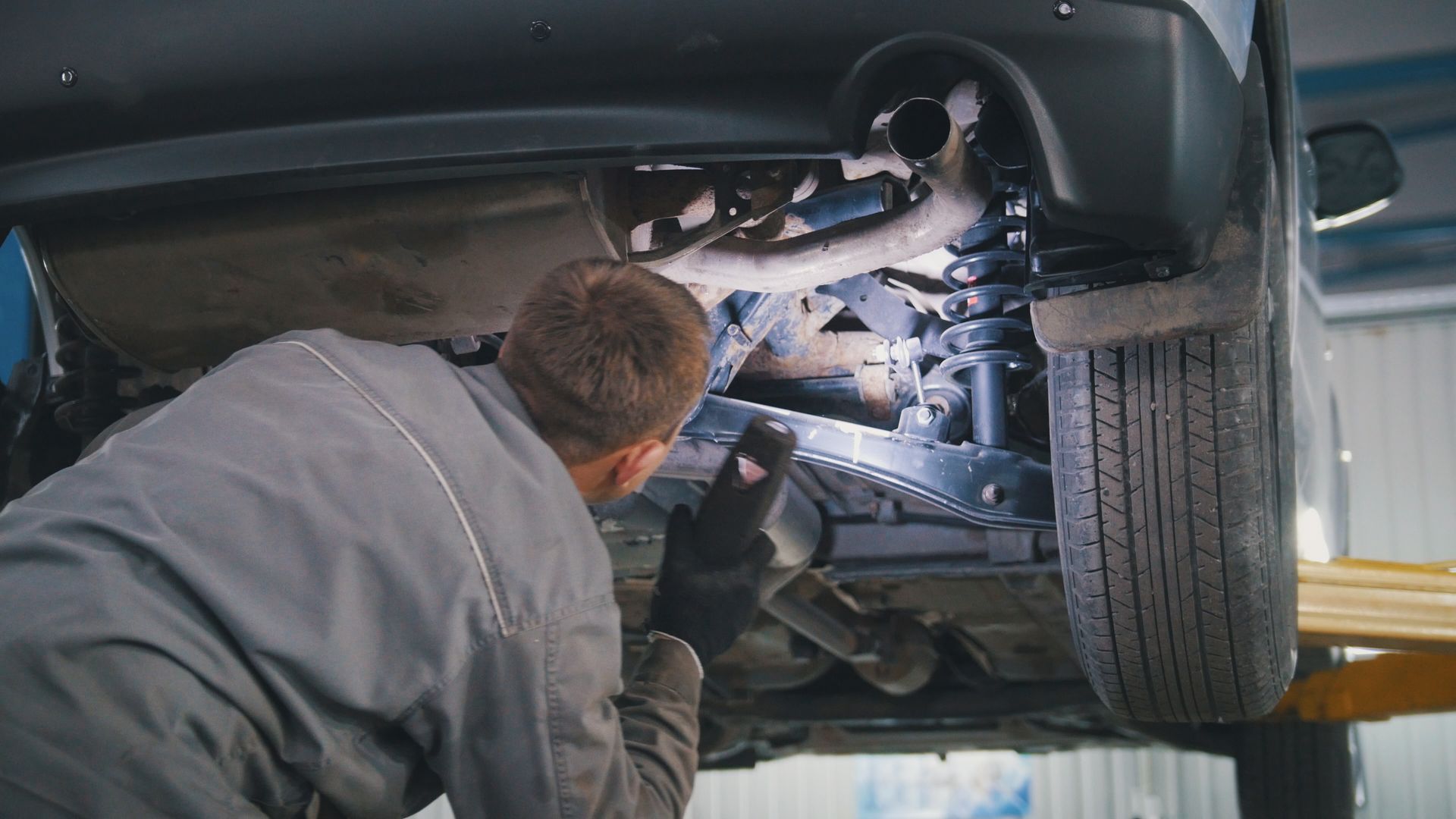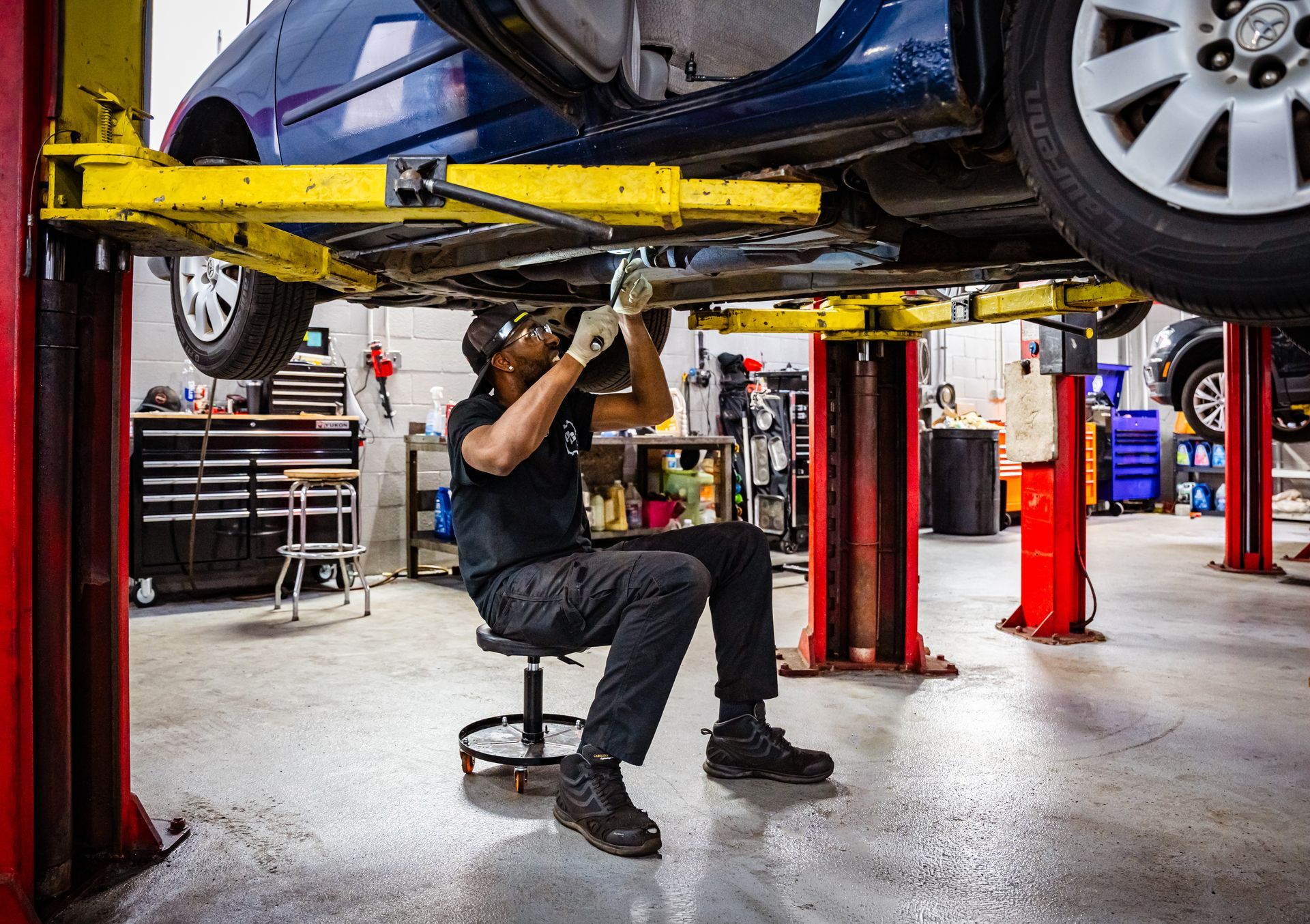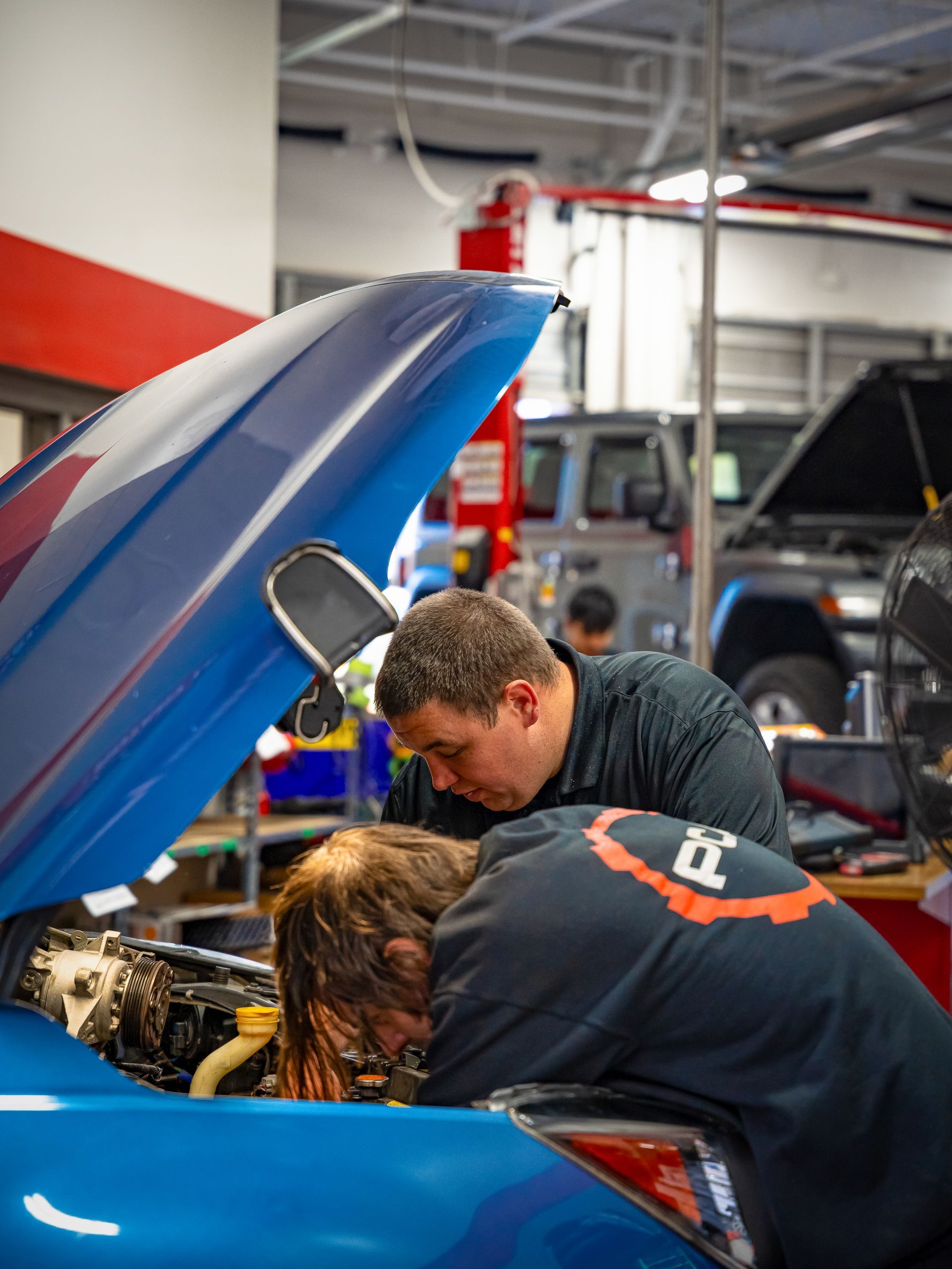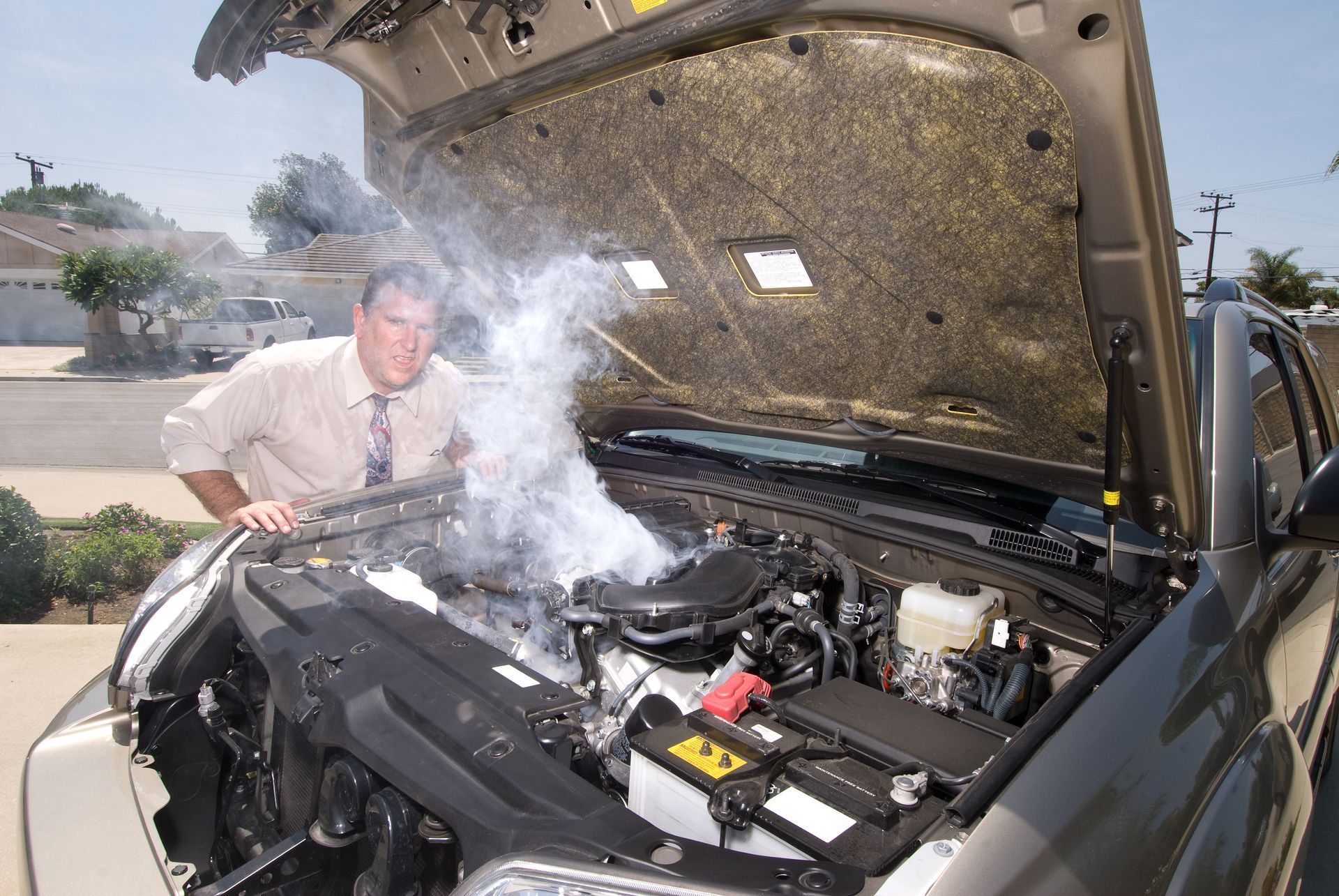
A noisy or rusty muffler can leave you wondering whether you can get by with a quick patch or if it is time to replace the whole thing. The exhaust may sound a little deeper, you might hear a rattle over bumps, or you may even spot a hole when you look underneath. The right choice depends on how far the damage has gone and what the rest of the exhaust system looks like.
What Your Muffler Actually Does In The Exhaust System
The muffler is the main sound control device in the exhaust. Inside, it uses chambers, baffles, and perforated tubes to cancel and redirect pressure pulses so the exhaust note is smoother and quieter. On many vehicles, the muffler design also has a small effect on exhaust flow and backpressure, which can influence low speed torque and overall drivability.
As long as the shell is solid and the internal parts are intact, exhaust flows through and exits at the tailpipe with a controlled sound. When the case rusts through, seams crack, or baffles break loose, you lose that control. The result is usually extra noise, possible fumes in places they should not be, and sometimes a muffler that moves more than it should on its hangers.
How Mufflers Usually Get Damaged
Most mufflers fail slowly. Moisture from inside the exhaust condenses when the system cools down, especially on short trips. That water sits in low spots and starts rust from the inside out. On the outside, road salt, winter brine, and general grime attack welds, seams, and mounting points. Over several seasons, solid metal turns flaky and thin.
Impacts also play a role. Steep driveways, speed bumps, and deep ruts can dent the shell or bend hangers. Once a hanger breaks or a rubber insulator tears, the muffler can hang low and flex more than it was designed to. Our technicians see a lot of mufflers that started as a simple hanger issue and ended up cracking at the inlet or outlet because the weight was no longer supported correctly.
When A Damaged Muffler Can Still Be Repaired
There are plenty of cases where a repair is the smart, budget friendly move. Localized problems like a small crack at a weld, a pinhole that has not spread, or a leaky clamp joint can often be fixed with welding, a new clamp, or a short section of pipe. If the shell feels solid when tapped and the rust is limited to one area, a well done repair can buy you several more years.
Support hardware is another common repair opportunity. Replacing broken hangers, worn rubber mounts, or rusted clamps can quiet rattles and stop the system from banging against the body. When we inspect an exhaust and find that the muffler itself is still strong but the hardware is tired, we will usually recommend fixing those support pieces first before talking about replacement.
Clear Signs It Is Time To Replace The Muffler
Replacement becomes the better option when the structure is too far gone to trust. Large rust holes, soft spots that crumble under light pressure, or seams that are splitting along long stretches all point toward a muffler that has reached the end of its life. In those cases, patching one spot tends to just move the weak point a few inches away.
Internal damage is another signal. If you hear a constant metallic rattle from inside the muffler or the exhaust note has changed to a harsh, boomy sound, the baffles or perforated tubes may have broken loose. A muffler in that condition can sometimes restrict flow as broken pieces shift around. At that point, replacement is usually more sensible than trying to chase noises that will keep coming back.
Owner Habits That Can Make Muffler Problems Worse
A few everyday habits can quietly push a marginal muffler over the edge:
- Ignoring a new exhaust rattle or deeper tone for months, instead of having it checked early
- Continuing to drive with a broken hanger so the muffler drags, flexes, or bangs against the floor
- Putting off repair when you can already smell exhaust around the rear of the vehicle or inside the cabin
- Relying on quick patch bandages over heavily rusted metal instead of planning a proper repair or replacement
We do not expect anyone to crawl under the car every week, but paying attention to changes in sound and smell and mentioning them early gives us a chance to fix a small problem before it becomes a safety concern.
How To Decide Between Repair And Replacement
A useful way to think about the decision is to look at the whole system, not just the worst spot. If the muffler is solid, the pipes are clean, and the issue is limited to one crack or hanger, a repair is usually a good bet. If the muffler is thin all over and the nearby pipes look just as rusty, replacing the muffler alone might only solve things for a short time.
In that case, stepping up to a new muffler and any weak adjoining sections often saves money and frustration over the next few years. When we inspect an exhaust, we will talk through what we see so you can choose the option that makes sense for your budget and how long you plan to keep the vehicle.
Get Muffler Repair and Replacement in Wilmington, DE with Paul Campanella’s Auto Centers
If your exhaust has gotten louder, you hear new rattles, or you can see rust forming around the muffler, a careful inspection can tell you whether a repair or full replacement is the smarter move. We can check the entire exhaust system, show you what is still solid, and recommend a fix that will last instead of just patching over trouble spots.
Schedule muffler repair and replacement in Wilmington, DE with Paul Campanella’s Auto Centers, and we will help keep your exhaust quiet, safe, and dependable.
- Paul Campanella's Auto Centers - Wilmington, 1015 W 28th St, Wilmington, DE
- Paul Campanella's Auto Centers - Pike Creek, 2379 Limestone Rd, Wilmington, DE
- Paul Campanella's Auto Centers - Talleyville, 3805 Concord Pike, Wilmington, DE
- Paul Campanella's Auto Centers - Kennett Square, 583 Unionville Rd, Kennett Square, PA
- Paul Campanella's Auto Centers - Swarthmore, 724 S. Chester Rd, Swarthmore, PA
- Paul Campanella's Auto Centers - Hockessin, 7300 Lancaster Pike, Hockessin, DE